Every site has a gate and every gate has a book, and the book is where accountability quietly goes to die. A tool goes out for repair and never comes back. A contractor takes equipment off site with a verbal nod from someone who was not authorised to give one. Something arrives and gets signed for by whoever was nearest. Nexora Gate Keeper turns all of that into records with approvals attached. An outward pass climbs an approval chain before anything moves. An inward pass records what arrived and confirms it. Returnable items get chased automatically. And every movement is tied to a specific gate and a specific branch, so a company with four sites can tell them apart.
The gate book is a ledger with columns nobody agrees on. Somebody writes down a description of what left, a name, and a time. Whether it was approved, and by whom, is not a column, because the approval was a phone call or a nod in a corridor.
Returnable items are the biggest single leak. A tool, a laptop, a piece of test equipment, a set of scaffolding goes out for repair or for a job at another site. The intention is genuinely that it comes back. Nobody is stealing anything. It simply gets forgotten, because there is no mechanism anywhere in the process whose job is to remember. Then a stock check happens a year later and there is a gap, and nobody can reconstruct where any of it went.
Inward is no better. Deliveries arrive and are signed for by whoever was closest to the barrier. If a delivery is short, the discovery happens later, when the paperwork no longer supports any kind of conversation with the supplier.

An outward pass is raised for whatever is leaving, with its details, its gate and whether it is returnable. It then climbs an approval chain before it is cleared at the barrier. The approval chain is the same configurable engine used by work permits, which means it can resolve approvers dynamically, including the manager of whoever raised the pass. Configure it once and it behaves the same way for permits and passes, which is far better for your administrators than learning two systems. Each approval is stored with a snapshot of the rules as they were at that moment, so changing your approval structure next quarter does not quietly rewrite what happened this quarter.
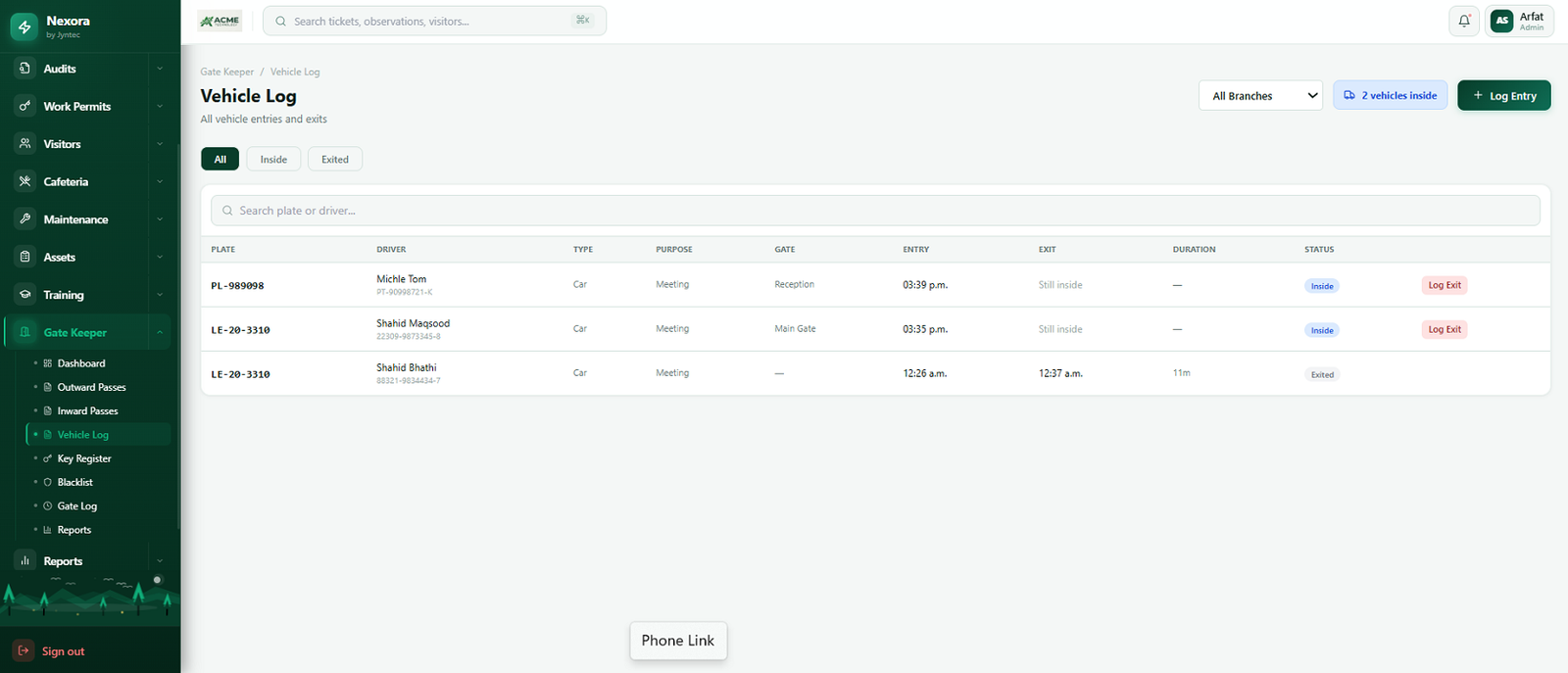
After approval the pass is cleared at the gate, which is a separate recorded step from the approval. That distinction matters, because approval and physical departure are genuinely different events and can be hours or days apart. If the item is returnable, the pass stays open until it comes back and is recorded as returned. That open state is what the reminder system watches, and it is the reason a returnable pass is more useful than a note in a ledger.
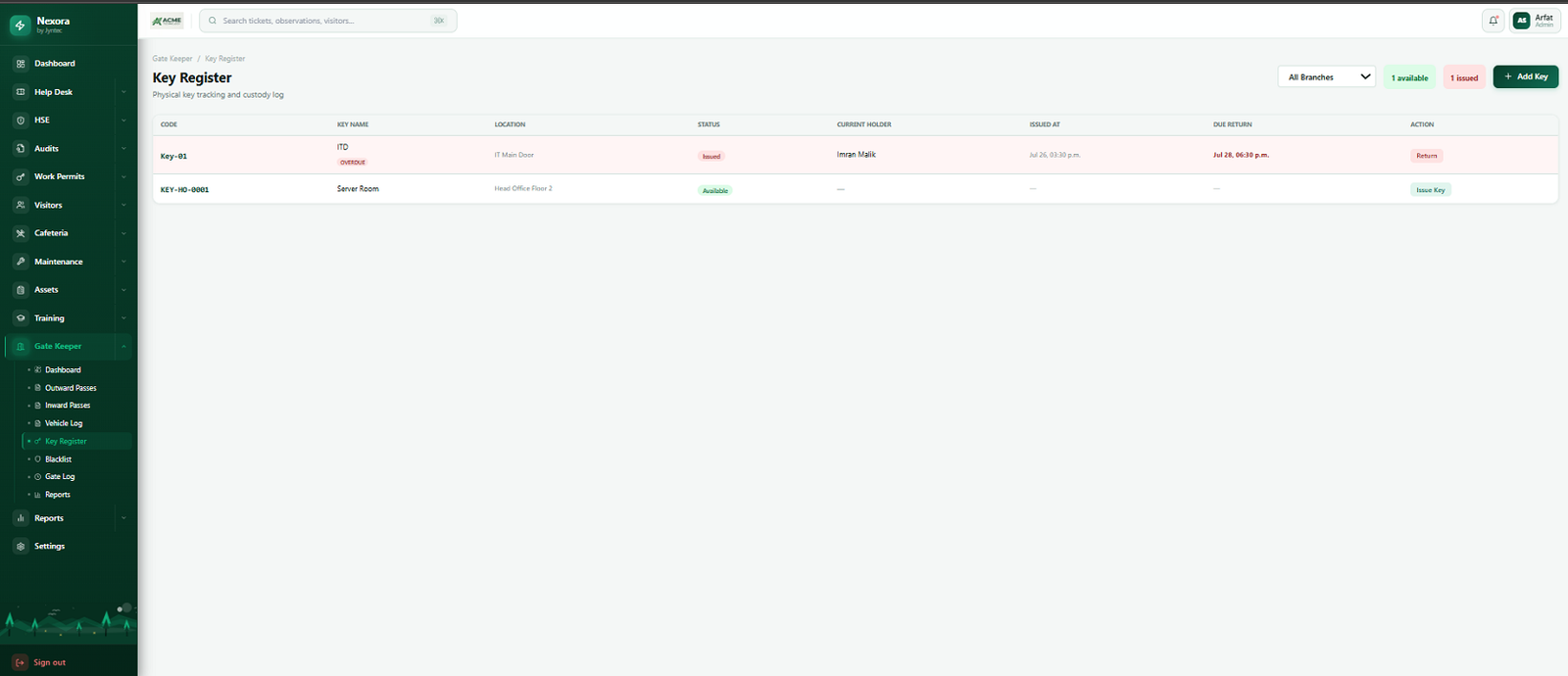
Inward passes have two states on purpose. Received means it arrived and somebody at the gate recorded it. Confirmed means it has been checked and accepted. Splitting those two apart is a small thing that solves a real problem. Signing for a delivery at a barrier is not the same as verifying it, and collapsing both into one signature is how short deliveries become undiscoverable a fortnight later. Two states means the gap between arrival and verification is visible.
Returnable item reminders run on their own. Anything out and not returned is chased. This is the least glamorous feature on the page and often the one with the clearest payback. Most companies have no idea what is out until a stock check, and by then the trail is cold and the conversation with the contractor is awkward and unwinnable. A reminder fired a week after the expected return date usually just gets the item back, because at that point somebody still remembers where it went.